
Marine Procurement ERP: 7 Workflows That Need One Source of Truth
The essential modules for a marine procurement ERP: inquiries, vendors, quotes, purchase orders, warehouses, shipments and finance.
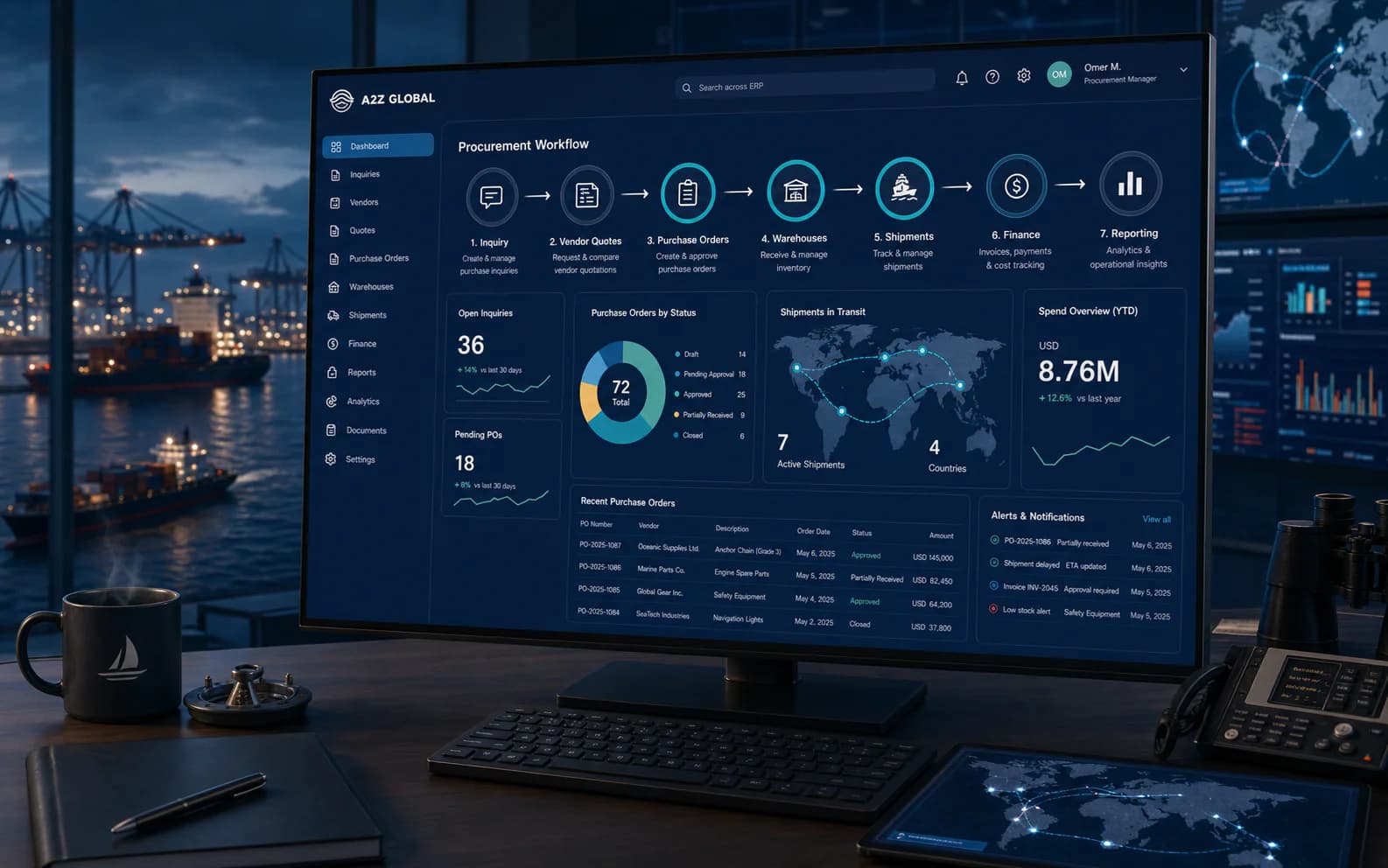
Inquiry → PO → shipment → financeFIG.01
Short answer
Marine procurement runs on seven connected workflows: enquiries, vendor management, quotations, purchase orders, warehousing, shipments and finance. They only work as one system when documents attach to the transaction they belong to, visibility is role-based, and the dashboard manages exceptions rather than displaying every record.
Key takeaways
- The seven workflows fail individually when each one keeps its own copy of the data.
- Documents belong to transactions — a certificate filed in email is a certificate you will not find during an audit.
- Role-based visibility matters more here than in most ERPs because vendor pricing is commercially sensitive.
- Build the dashboard around exceptions: overdue quotes, short shipments, unmatched invoices.
Marine procurement combines urgent inquiries, technical specifications, multiple vendor quotes, international purchasing and shipment deadlines. When each department tracks a different sheet, the company cannot answer a basic question quickly: where is this requirement right now? A purpose-built ERP platform makes that status visible end to end.
The seven connected workflows
- Inquiries: customer requirements, vessel details, attachments and response deadlines.
- Items master: normalized descriptions, units, specifications and historical sourcing notes.
- Vendors and quotes: comparable offers, currencies, lead times and supporting documents.
- Purchase orders: approvals, revisions, terms and a clear link back to the customer requirement.
- Warehouses: receipts, available stock, reservations and dispatch preparation.
- Shipments: milestones, documents, delays and delivery evidence.
- Finance and reporting: payable and receivable status tied to the operational record.
Documents belong to transactions
Specifications, vendor quotations, purchase orders, packing lists and shipping documents should be attached to the record they describe. Search then starts with the inquiry or PO, not with guessing a filename in a shared drive. AI document intake can remove much of the retyping while preserving the original file for audit.
Role-based visibility matters
Procurement needs supplier and quote access; warehouses need receipts and dispatches; finance needs commercial values and payment state; management needs exceptions and trends. One database does not mean every user sees every field.
The dashboard should manage exceptions
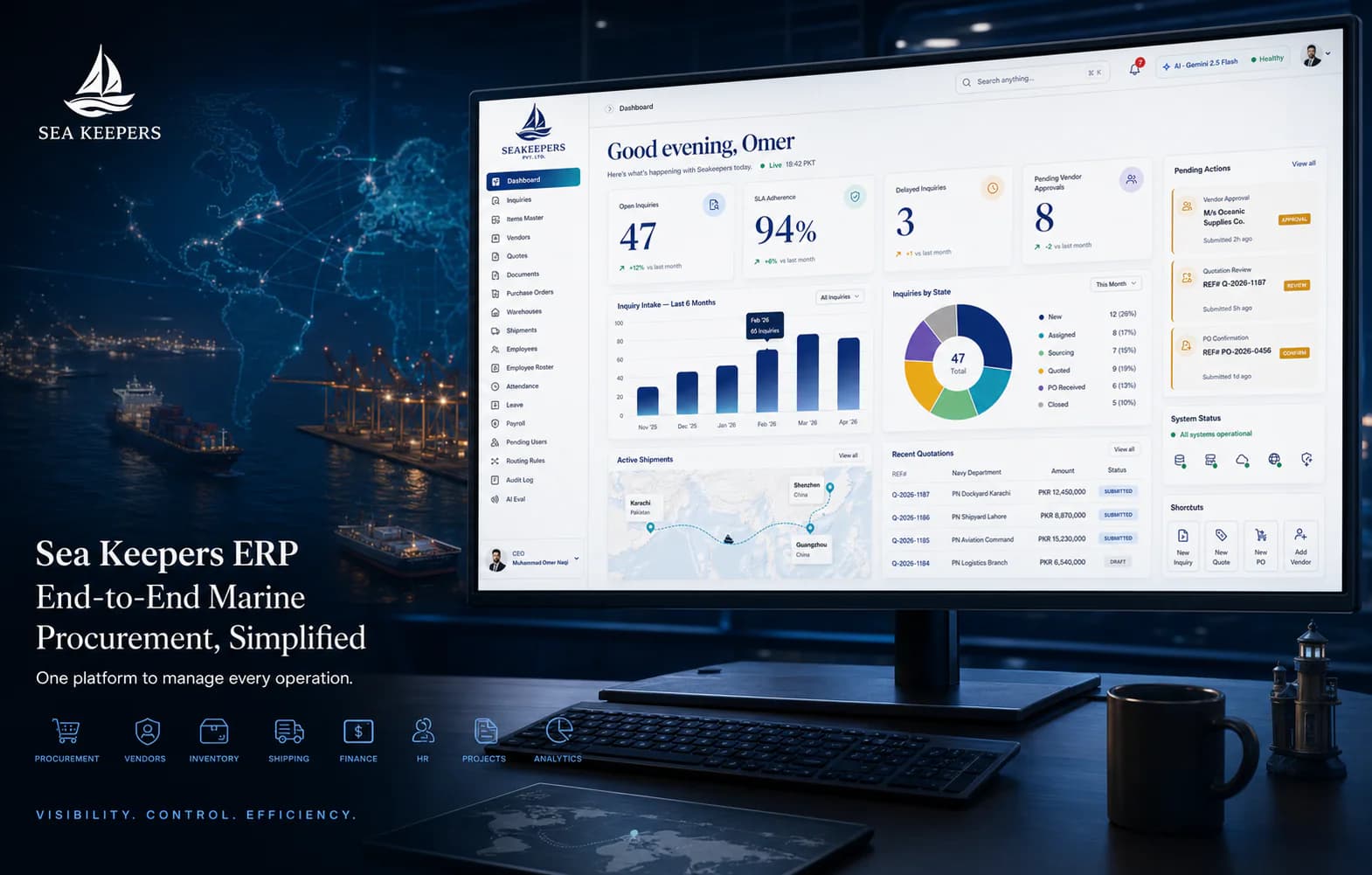
Prioritize inquiries near deadline, POs waiting for approval, partial receipts, delayed shipments, missing documents and overdue payments. The Sea Keepers ERP case study shows this workflow translated into one marine operations platform. Tell us how your procurement moves and we will map the first module.
Frequently asked questions
Can a marine ERP support multiple offices and warehouses?
Yes. Locations, permissions, stock balances, currencies and document sequences can be configured independently while management retains one consolidated view.
Should accounting be built into the ERP?
Operational receivables and payables should be visible in the ERP. Full statutory accounting can either be built in or synchronized with the finance system already in use.
How should a marine ERP be rolled out?
Start with inquiry, quotation and purchase-order flow, then add warehouses, shipments and finance. Moving module by module lowers training and migration risk.
/Services in this article
/ERP & CRM Systems by country
Keep reading
All articlesERP Implementation Roadmap: From Spreadsheets to a Live System
A lower-risk rollout plan for mapping workflows, cleaning data, piloting one module, training teams and expanding ERP adoption.

How to Automate Your Company: The Order to Do It In
A practical method for automating a business: how to choose the first process, how to score the rest, what to leave manual on purpose, and how to phase it so each stage pays for the next.