What a Global Ecommerce Operations Website Must Explain
How to turn sourcing, marketplace management, warehousing, fulfillment and reporting into a clear website that earns consultation requests.

Sourcing → marketplace → fulfillmentFIG.01
Short answer
An ecommerce operations website has to explain the operating model before the service list: what the client keeps, what you take over, and where the handover sits. Each service needs a stated boundary, proof shown without exposing client data, and a consultation step framed as a working session rather than a sales call.
Key takeaways
- Buyers of operations services are choosing a working relationship, so lead with the operating model.
- Every service needs an explicit boundary — what is included and what is not.
- Show proof at the level of process and outcome without naming figures you cannot support.
- Make the consultation the obvious next step, not a generic contact form.
A global ecommerce operator sells confidence before it sells a service. Brands need to understand who handles sourcing, where stock sits, which team owns marketplace performance and how problems are reported. A strong ecommerce website turns that complicated operating model into a journey a buyer can scan in minutes.
Lead with the operating model
The homepage should answer three questions immediately: what you manage, which markets you cover and what the client still needs to own. A simple sourcing-to-fulfillment flow communicates more than a paragraph full of broad claims.
Give every service a clear boundary
- Sourcing: supplier discovery, product checks and commercial coordination.
- Marketplace operations: listings, inventory, campaigns and channel management.
- Warehousing and fulfillment: stock intake, storage, dispatch and returns.
- Reporting and support: decision-ready summaries, issue ownership and response routes.
Show proof without exposing client data
Use anonymized workflows, sample reporting views, warehouse coverage and clearly explained case studies. Avoid decorative dashboards filled with unsupported numbers. The buyer needs evidence that the process exists, not a wall of vanity statistics.
Design consultation as the next logical step
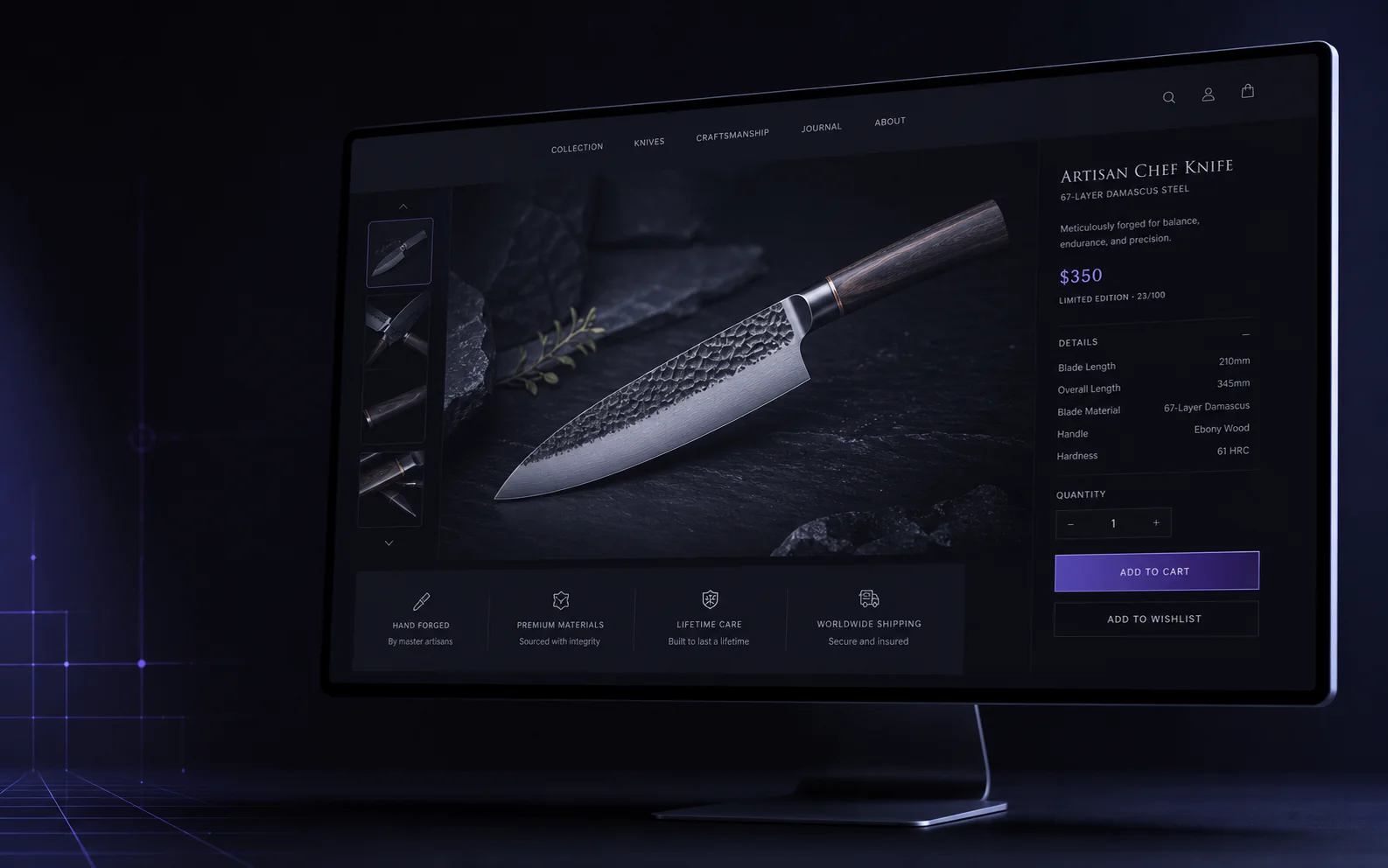
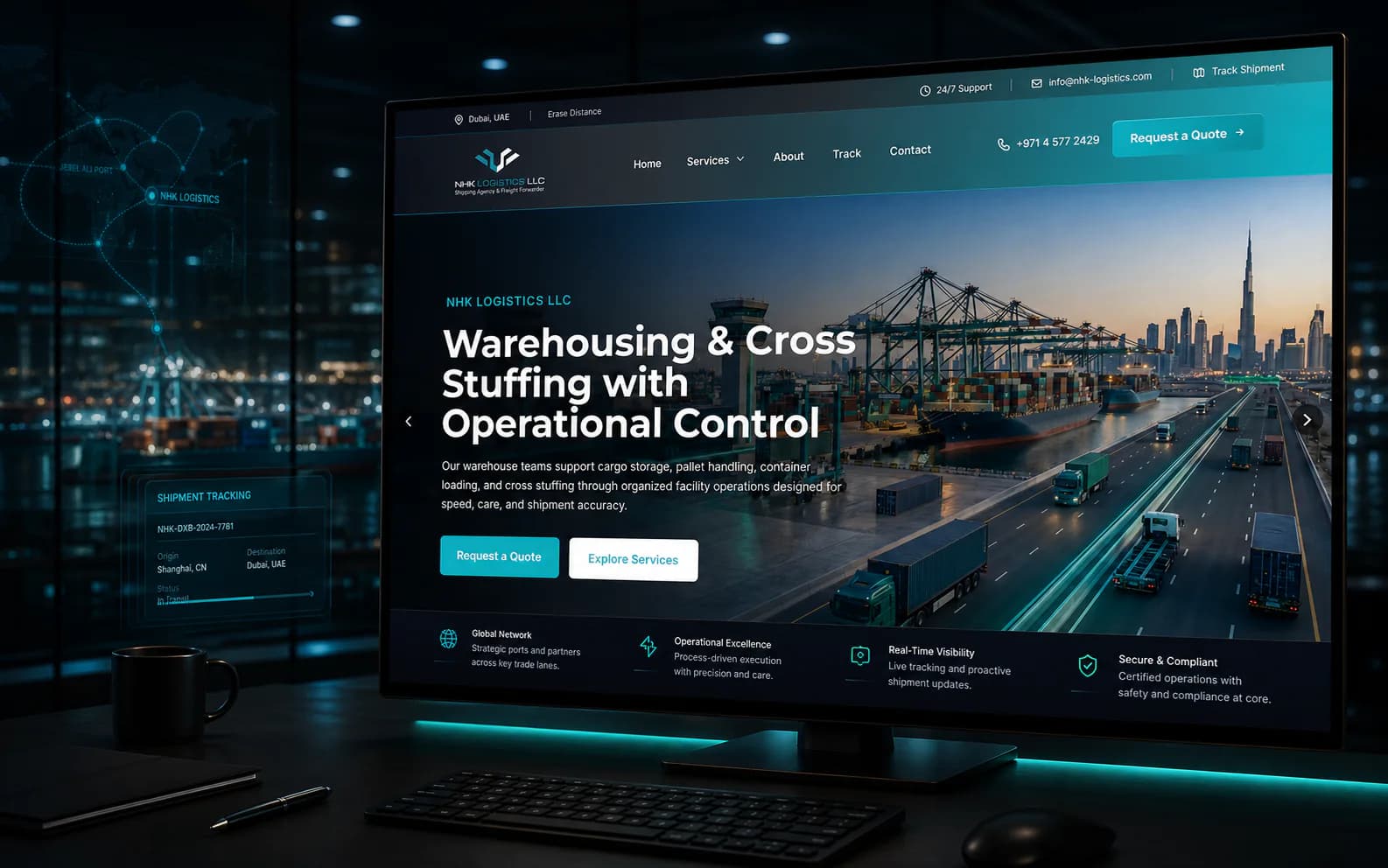
A good inquiry form asks only what the team needs to route the conversation: target market, current channels, product category and required services. The XD Ecommerce website case study demonstrates this dark, operations-led approach. For a platform that makes a complex offer easy to buy, start a web project.
Frequently asked questions
Should an ecommerce operations company show pricing online?
Show how pricing is structured, but fixed packages rarely fit global operations. A short qualification form is usually more useful than a misleading flat fee.
What builds trust on a sourcing website?
Clear process ownership, geographic coverage, quality-control steps, reporting examples and named contact routes build more trust than unsupported partner counts.
Does the website need a client dashboard?
Not always at launch. The marketing site should explain and convert; a secure dashboard becomes valuable when clients need live stock, shipment or reporting access.
/Services in this article
/Web Development by country


Keep reading
All articlesWeb Design in Pakistan: What Changes Between Karachi, Lahore and Islamabad
How a business website should differ depending on whether its customers are in Karachi, Lahore or Islamabad — what visitors in each city expect, what they search for, how they pay and contact you — and how to brief a web designer in any of them.
Ecommerce Product Page Checklist: What Actually Helps Conversion
The product imagery, copy, pricing, trust signals and mobile details that help buyers make a confident purchase decision.