
03
Mobile App Development
Native-feeling mobile apps for iOS and Android from one codebase. Offline-first architecture, push notifications and store submission handled end to end.
Short answer
A2Z Global builds iOS and Android apps for customers and field teams, usually cross-platform from a single Flutter or React Native codebase so one change ships to both stores. Apps are published under store accounts in your company's name, with offline support where staff work without signal. Every project gets a fixed written quote after discovery.
Key takeaways
- Cross-platform is the default for business apps; native is the exception you should be able to justify.
- The cost of an app is mostly the years after launch, where one codebase halves the work.
- App store accounts and signing keys must be in your company's name.
- Scope the first release around one journey a user completes, not a list of features.
Customer apps and field apps
| Customer app | Field / staff app | |
|---|---|---|
| Used by | Your customers | Sales reps, drivers, technicians |
| Must do | Browse, order, pay, track | Capture orders, photos, signatures, location |
| Hard part | Store listing, payments, retention | Offline mode and syncing when signal returns |
| Connects to | Your website, CRM, payment gateway | Your ERP, inventory, dispatch |
Which approach suits your app — Flutter, React Native or fully native — is covered in native or cross-platform. For most business apps the answer is cross-platform, with native code only for the one screen that needs it.
What is included
- UX and interface design approved before development.
- Android and iOS builds from one codebase.
- Back end and admin panel, or integration with the system you already run.
- Store submission, including privacy disclosures and screenshots.
- Store accounts, signing keys and source code in your company's name.
How an app project runs
Define the first journey
The one thing a user must be able to do end to end — the basis of a sensible MVP.
Design and prototype
Clickable screens you can test on a phone before a line of code.
Build
App, back end and admin, with test builds you install as they progress.
Store submission
Listing, review and release on Google Play and the App Store.
Measure and extend
Real usage decides version two, not the original wish list.
/Markets
Mobile App Development in Pakistan, the UAE, Saudi Arabia, the USA and the UK
Tax, e-invoicing, payments and language change from one country to the next. Choose yours to see what that means for this service.
What you get
- iOS + Android apps
- App Store / Play Store submission
- Push notifications & analytics
- Crash monitoring & OTA updates
Common questions
One codebase or native?
Cross-platform (React Native/Flutter) covers 95% of apps at half the cost; we go fully native only when hardware demands it.
Who owns the store accounts?
You do. We publish under your developer accounts so you keep full ownership.
How much does an app cost?
It depends on screens, whether it needs a back end, and how many integrations it carries. You get a fixed written quote after discovery. What app development costs explains what moves the number.
Can the app work without internet?
Yes. Field apps are usually built offline-first: data is captured on the phone and synced when signal returns, with conflicts handled rather than silently overwritten.
Do we need an app or would a mobile website do?
If people use it occasionally, a fast mobile website avoids the install barrier. An app earns its place when people use it often, need offline access, or rely on notifications.
Can the app be in Arabic or Urdu?
Yes — including right-to-left layouts for Arabic, which have to be designed in rather than translated at the end.
Mobile App Development in action
All projects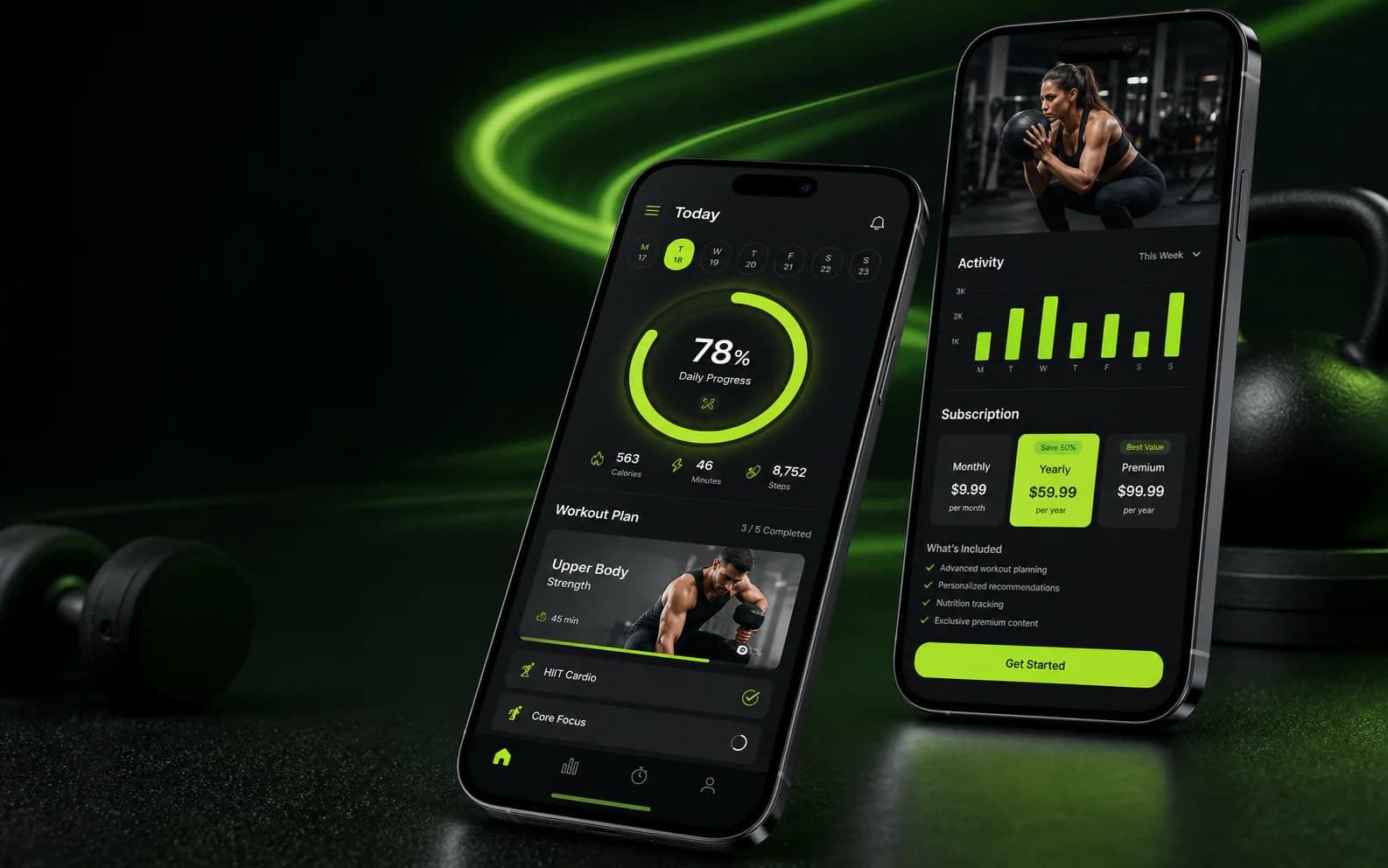
Related reading
All articlesHiring a Software Developer in Pakistan: Karachi, Lahore and Islamabad Compared
What actually differs when you hire a software developer in Karachi, Lahore or Islamabad — the kind of work each city does, how to meet and manage a team in another city, and the checks that matter more than the postcode.
Native or Cross-Platform? Choosing How Your Mobile App Gets Built
Flutter, React Native, Swift and Kotlin compared for business apps — what each approach is good at, where the real cost difference sits, and how to pick without over-engineering.
Software for Distribution Businesses: Orders, Stock and Recovery
How distributors and wholesalers get orders, inventory, dispatch and credit recovery into one system — and which module to build first.
School Management Systems: What Actually Reduces Admin Work
Which modules genuinely save time for a school or institute — fee collection, attendance, results, parent communication — and what to avoid buying.