
How to Build an Order-to-Cash ERP for a Packaging Business
A practical blueprint for connecting customer orders, artwork approval, material inventory, production, invoicing and payments in one packaging ERP.
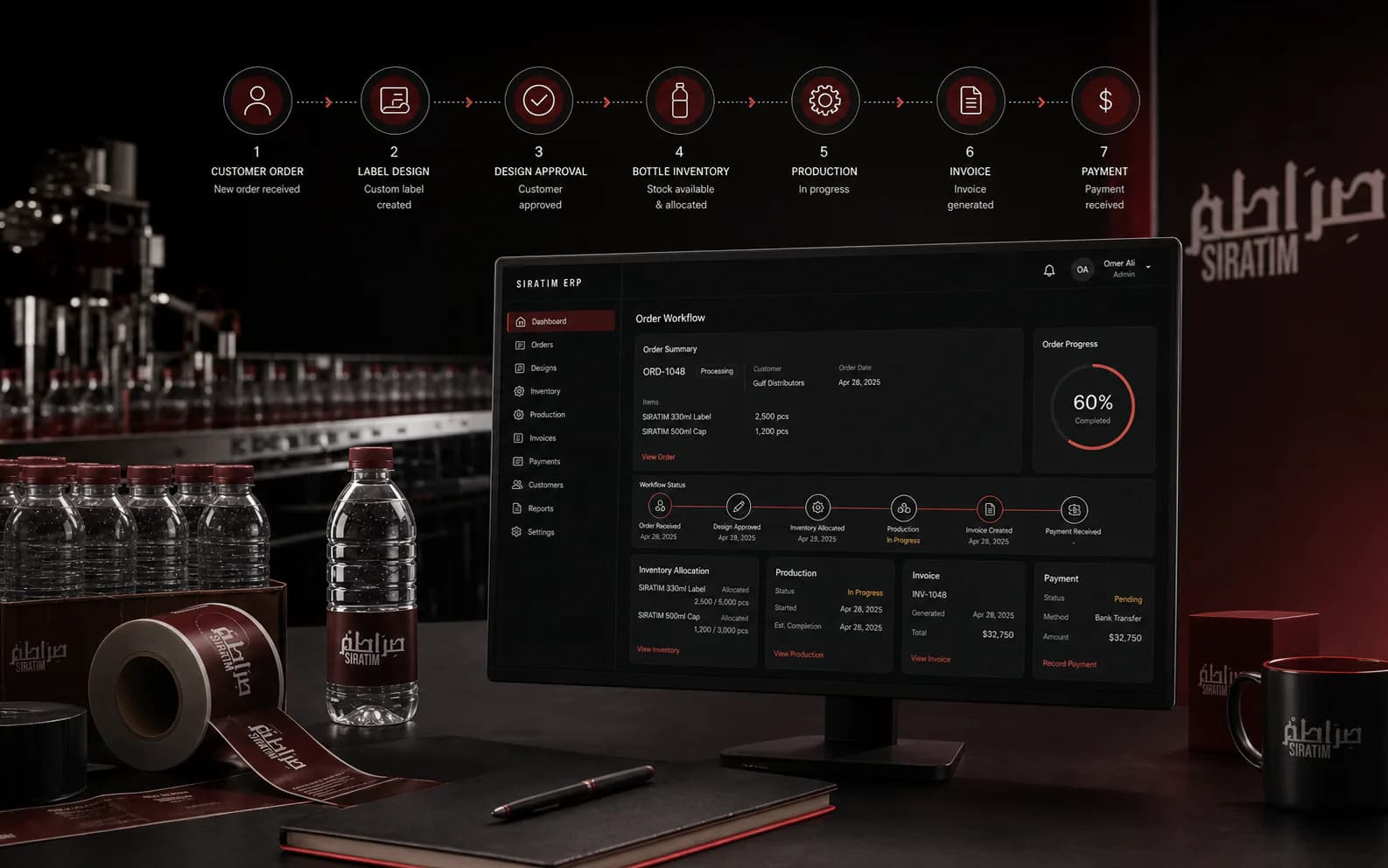
Order → label → stock → invoiceFIG.01
Short answer
A packaging ERP works when one order record carries the job from enquiry to payment. Artwork approval becomes a controlled stage with versions, material is reserved before production starts, the invoice is generated from completed work rather than retyped, and the dashboard surfaces exceptions instead of listing everything.
Key takeaways
- One order record, carried end to end, prevents the re-entry where packaging errors originate.
- Artwork approval needs versions and a recorded sign-off — verbal approval is the most expensive shortcut in the trade.
- Reserve material at order confirmation, not at production start.
- Invoice from completed production so the books and the floor agree.
Custom packaging looks simple from the buyer's side: send a logo, approve a label and receive the finished product. Behind the scenes, one order touches sales, design, stock, production, finance and delivery. A useful custom ERP connects that chain instead of turning every handoff into a WhatsApp follow-up.
Start with one order record
The order should hold the customer, product specification, quantity, agreed price, delivery date and every attached artwork version. Sales, design and production then look at the same record. Nobody has to ask which PDF is approved or whether the quantity changed after the quote.
Make artwork approval a controlled stage
- Store every label revision against the order instead of in personal chat histories.
- Record who approved the final design and when, with the approved file locked from accidental replacement.
- Block production until approval is recorded, while making urgent exceptions visible in the activity log.
Reserve stock before production starts
Bottles, caps, labels and packaging materials should be allocated when the order is confirmed. This prevents two jobs from promising the same stock and gives purchasing an early low-stock warning. The system should support adjustments with a reason, not silent edits that destroy the audit trail.
Generate the invoice from completed work
Once production reaches the agreed stage, the ERP already knows the client, items, quantities and pricing. The invoice should be generated from that data, payments recorded against it and outstanding balances shown without a separate reconciliation sheet.
Build the dashboard around exceptions
A useful dashboard does not repeat every record. It surfaces active orders, designs waiting for approval, low-stock items, overdue invoices and payments that need attention. Our Siratim website and ERP case study shows how the customer-facing brand and this operational workflow can live as one digital ecosystem. If your packaging workflow is still split across files, map it with us.
Frequently asked questions
Which module should a packaging ERP launch with first?
Start with orders and artwork approval, because every downstream activity depends on those records. Add inventory and invoicing once the team is reliably using the order workflow.
Can an ERP store label artwork and customer logos?
Yes. Files should live in secure object storage, linked to the correct order and revision, with role-based access and an approval history.
Can existing spreadsheet data be imported?
Yes. Clients, products, prices, stock balances and open invoices can be cleaned and imported before launch, then reconciled against the source files.
/Services in this article
/Web Development by country


Keep reading
All articlesClinic and Hospital Management Software: Where to Start
A practical order for digitising a clinic or hospital — appointments, patient records, billing, pharmacy and reporting — with patient privacy handled properly.
Freight Forwarding Software: Job Files, Costing and Documents
What a freight forwarder needs from software — a job file that carries every cost and document from booking to invoice, and profit per job you can trust.